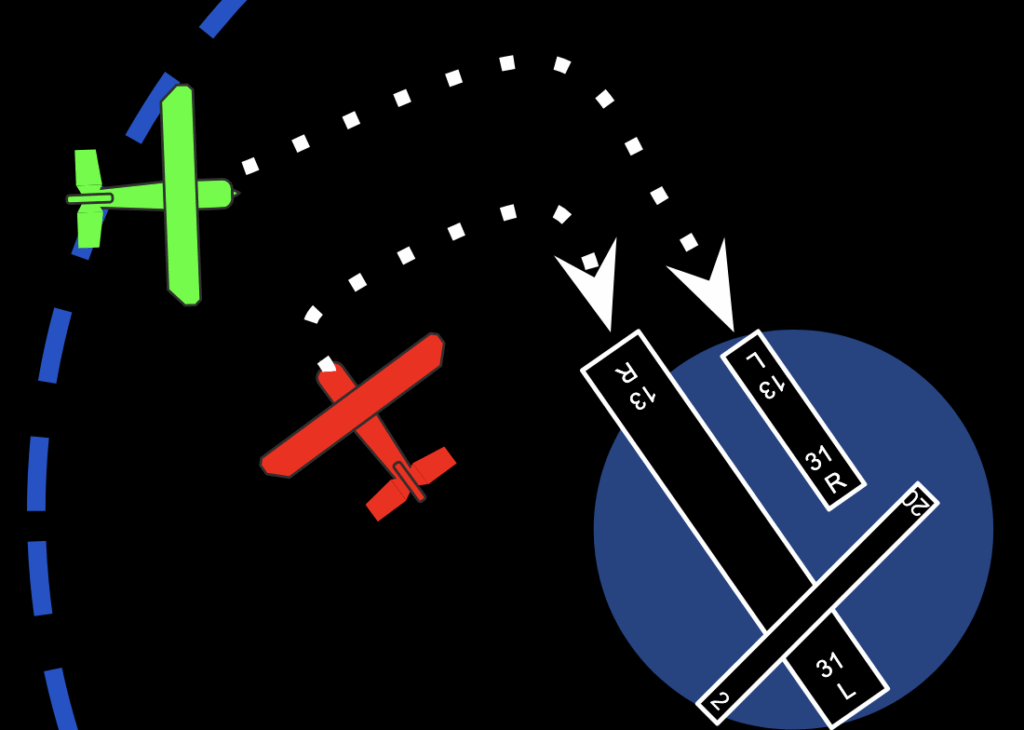
Towered Airports can seem unpredictable and intimidating. The first step to being able to predict and plan ahead is familiarity. Understand radio calls by practicing them! This article focuses on towered airport calls. A future article will cover non-towered radio calls.
Of course, practice listening to Live ATC on the web or with a handheld radio. Practice writing what your hear. Practice speaking out loud what the pilot (which is you, of course) says!
In this article, the highlighted orange represents the required readback. For demonstration, I have also written out pilots’ responses. notice how the pilot readbacks are just the highlighted orange readback!
Note: if some images appear small, you can right-click and press “open in new tab” to full-sized.
| TABLE OF CONTENTS 1.) Takeoff & Departure 2.) Arrivals 3.) In the Traffic Pattern 4.) Additional Tricky Calls |
Takeoff & Departure
Dept. Example 1
You are the pilot of N64942. You have notified ATC you intend to fly a southbound departure. Your takeoff clearance sounds like this. . .
Transcript
Pilot: “Hillsboro Tower, Cessna 64942 31L on A8 ready for departure.”
Tower:
“Cessna 64942, Hillsboro Tower. Runway 31L at alpha-8 cleared for takeoff“
Pilot: “31L on Alpha-8 Cleared for takeoff 942.”
However! while climbing in the upwind, you hear this. . .
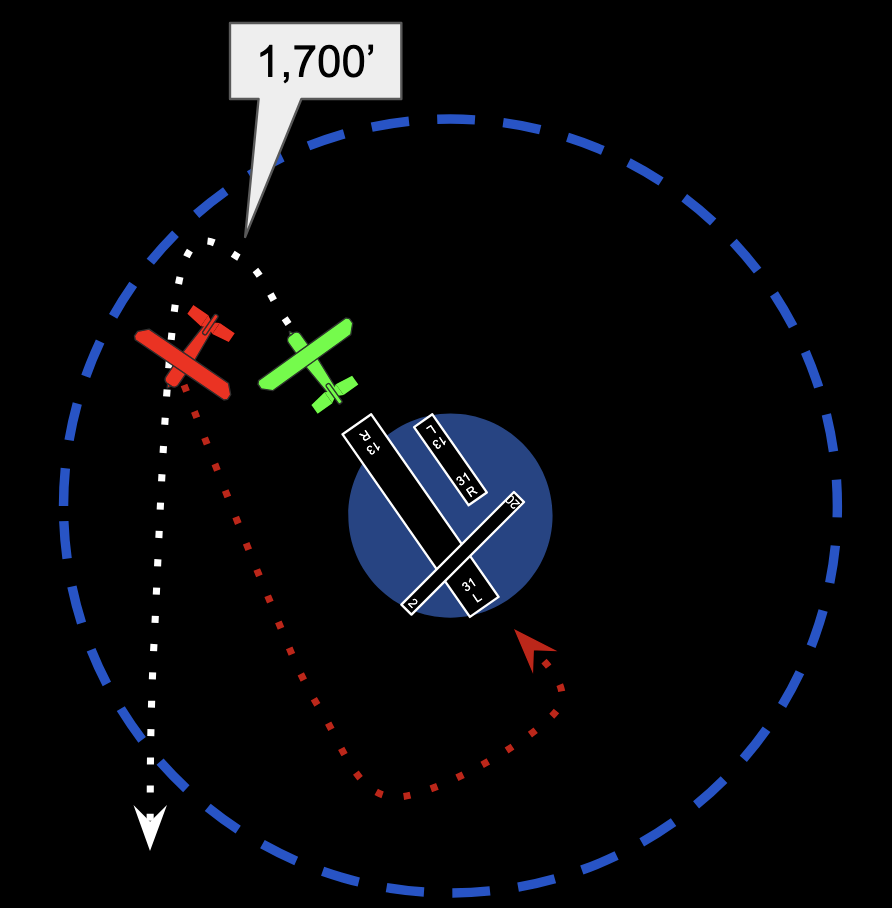
“942, fly straight out to 1,700 then south bound approved traffic ahead and to your left on crosswind turning downwind; Seminole. [PA-44]”
Pilot: “Straight out 1,700 then south bound. Traffic in sight”
Interpretation
“31L at alpha 8” -> Including ‘at alpha 8’ is important. Tower always identifies your taxiway when you depart from an intersection.
“straight out to 1,700 then south bound approved” -> This means continue your climb on runway heading, after you climb above 1,700 you may turn to the south.
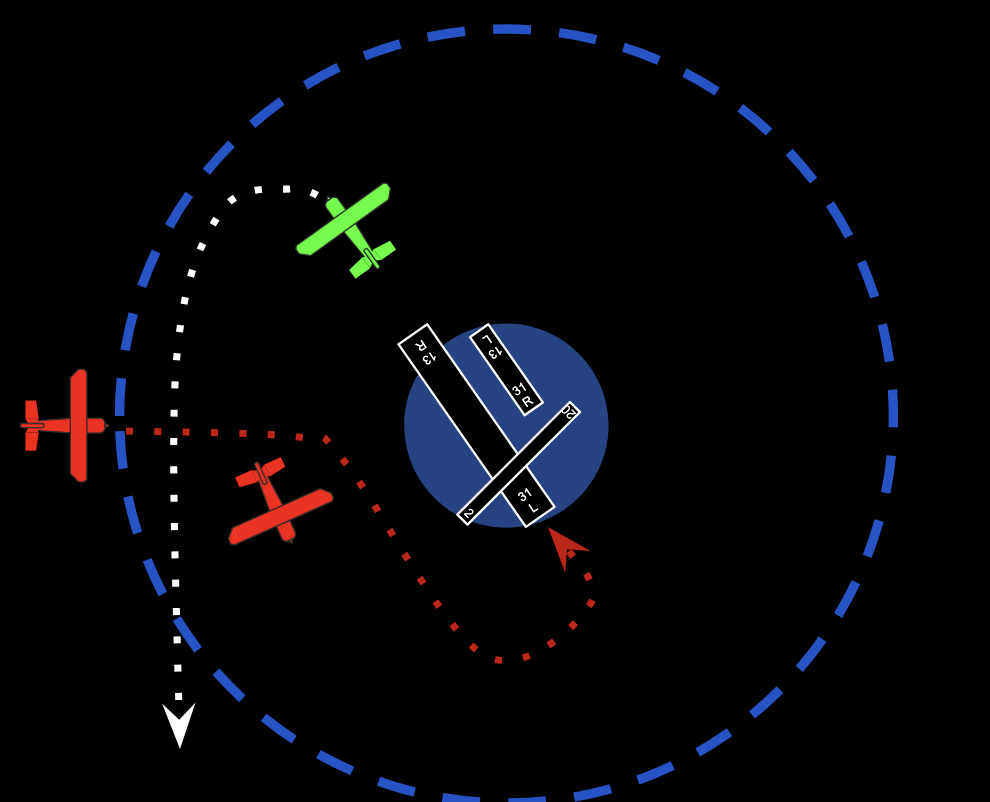
“traffic ahead and to your left on crosswind turning downwind; Seminole” -> ATC is warning you of traffic you will be passing nearby:
GREEN = YOU
Red = Traffic that ATC is referencing
Dept. Example 2
You are now the pilot of Skyhawk 324SP. You plan to fly a westbound departure. Your departure sounds like this. . .
Transcript
Pilot: “Hillsboro Tower, Skyhawk 324SP 31L on A8 ready for departure.”
Tower:
“Skyhawk 324SP, Hillsboro Tower. Runway 31L at alpha-8 cleared for takeoff winds 040 at 7 gusts 15″
Pilot: “31L on Alpha-8 Cleared for takeoff 4SP.”
However! shortly after departure, you hear this. . .
“Skyhawk 4SP traffic ahead and to your left. 2 miles. uh, on the downwind. Cessna 1,300 indicated. Do you have them in sight?“
Pilot: “Traffic in sight, 4SP”
Tower:
“Skyhawk 4SP, roger. Uh, past them west bound approved“
Pilot: “Pass them, then westbound.”
GREEN = YOU
Red = Traffic that ATC is referencing
Interpretation
“winds 040 at 7 gusts 15” -> ATC has informed you of the winds. You do not need to read this back to them.
“straight out to 1,700 then south bound approved” -> This means continue your climb on runway heading, after you climb above 1,700 you may turn to the south.
“traffic ahead and to your left. 2 miles…”-> ATC is warning you of traffic. They are located 2NM away from YOU and they are in-front-of and to-the-left of you.
“Cessna 1,400 indicated” -> Traffic is a cessna, probably at 1,400ft.
“Do you have them in sight” -> standard response is either “traffic in sight” or “negative contact”
“Past them west bound approved” -> Once you verify they are out of the way and a safe distance, you can turn west.
Dept. Example 3
Now you are the pilot of Cessna 14SK. You’re planning to fly a westbound departure, however, your takeoff clearance sounds like this. . .
Transcript
Pilot: “Hillsboro Tower, Cessna 14SK 31L on A8 ready for departure.”
Tower:
“Cessna 14SK, Hillsboro Tower. Fly straight out. Runway 31L at alpha-8 cleared for takeoff winds 050 at 6″
Pilot: “Fly straight out. 31L on Alpha-8 Cleared for takeoff 4SK.”
However! shortly after departure, you hear this. . .
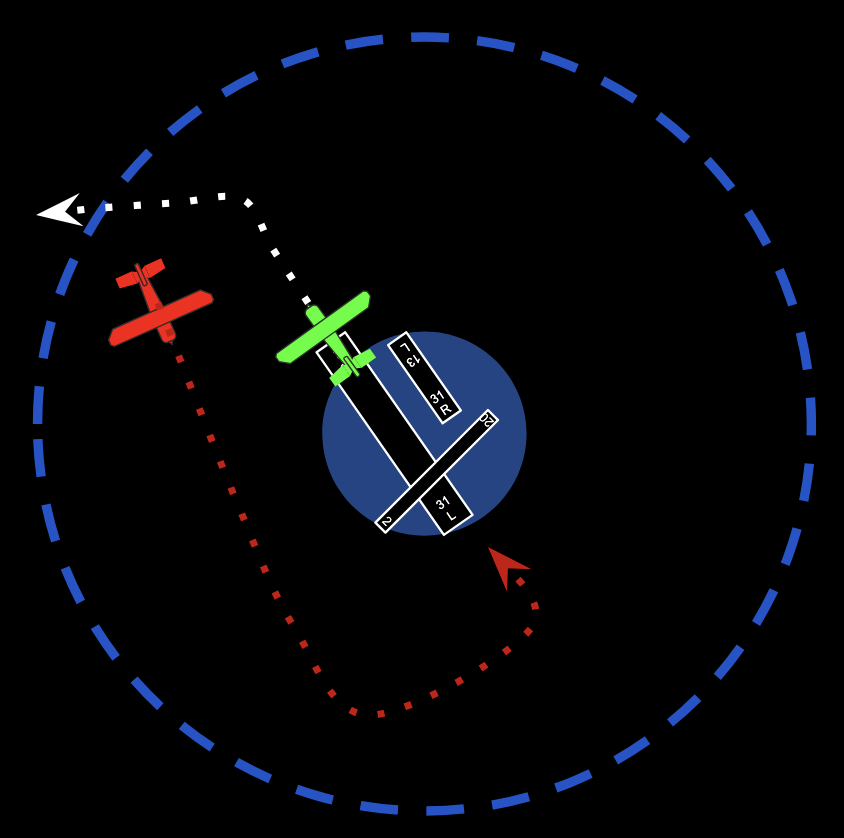
“Cessna 4SK left turn southbound is approved uh traffic inbound from the west. A Cessna. 2 miles west of the field 1,200 feet indicated. Additional traffic 4 miles west of the field inbound on the ’45. Contact Portland Departure.”
Pilot: “Left southbound, negative contact, contact departure, seeya!”
GREEN = YOU
Red = Traffic that ATC is referencing
Interpretation
“Fly Straight out” -> you must maintain runway centerline until tower approves you to turn.
“southbound is approved” -> you may turn southbound now.
“Traffic… A Cessna” -> The traffic will look like a cessna.
“Inbound on the ’45” -> This traffic is also inbound, and making a 45′ entry to the downwind, most likely.
“Contact Portland Departure” -> Departing from a towered airport with flight following, they’ll tell you when to contact the next frequency.
“Negative contact” -> this means I don’t see the traffic but am looking.
Dept. Example 4
You are the pilot of Cessna 49824. You have just reached 31L, and are currently performing your before-takeoff checklist, when all of the sudden, you hear. . .
Transcript
Tower:
“Cessna 49824, Hillsboro Tower. if you’re up, you ready?
Pilot: “Affirmative, 824”
Tower:
“Cessna 824 runway 31L on Alpha-8 Line up and wait.“
Pilot: “31L on Alpha-8 Line up and wait, 824”
After a short delay, you hear. . .
Tower:
“Cessna 824 left turnout southbound approved. Runway 31L at alpha-8 cleared for takeoff. Winds 190 at 6, caution wake turbulence: departed Gulfstream”
Pilot: “Soutbound approved, 31L at alpha-8 cleared for takeoff”
Interpretation
“you ready” -> This radio call may be sudden, if you are 100% ready, respond with affirmative and expect immediate departure. IF YOU’RE NOT its OK to say “negative, 824”. Never rush checklists!
“southbound is approved” -> Sometimes, tower will not specifically say your departure direction is approved. It is often assumed*. When in doubt, always verify with ATC.
*In may be assumed if you have already informed ground of your departure direction
“Caution wake turbulence” -> Tower will warn you after heavy aircraft land/depart.
“traffic departed gulfstream” -> ATC is informing you the cause of the wake turbulance is from a jet “gulfstream”. Its OK if you dont know every type of jet name, but ATC will often inform you of the aircraft type for situational awareness (gulfstream is big).
Dept. Example 5
You are the pilot of Cessna 92448. You have already informed Hillsboro Ground you will be flying to Twin Oaks. Today, you ground has assigned you to taxi to RW 31L on C for an intersection departure from taxiway C!
Transcript
Tower:
“Cessna 92448, Hillsboro Tower. you ready for departure?”
Pilot: “448 ready to go”
Tower:
“Cessna 448 left turnout to Twin Oaks approved runway 31L at Charlie cleared for takeoff. Traffic: Seminole left base.”
Pilot: “Left turnout approved. 31L at Charlie cleared for takeoff 448”
Tower:
“Cessna 448, thanks for your, uh, transponder. It did show back up now. Altitude indicates 1,000 and one aircraft appears to be in the pattern at twin oaks. 1,200 indicated. Cessna. Frequency change approved. Good day!”
Pilot: “Negative contact, frequency change approved. Thanks, you too, 448!”
Interpretation
See below a diagram to assist with intersection departures. Its critical to avoid departing in the wrong direction. use this memory aid: The red runway sign corresponds to where the runway numbers are painted on the runway!
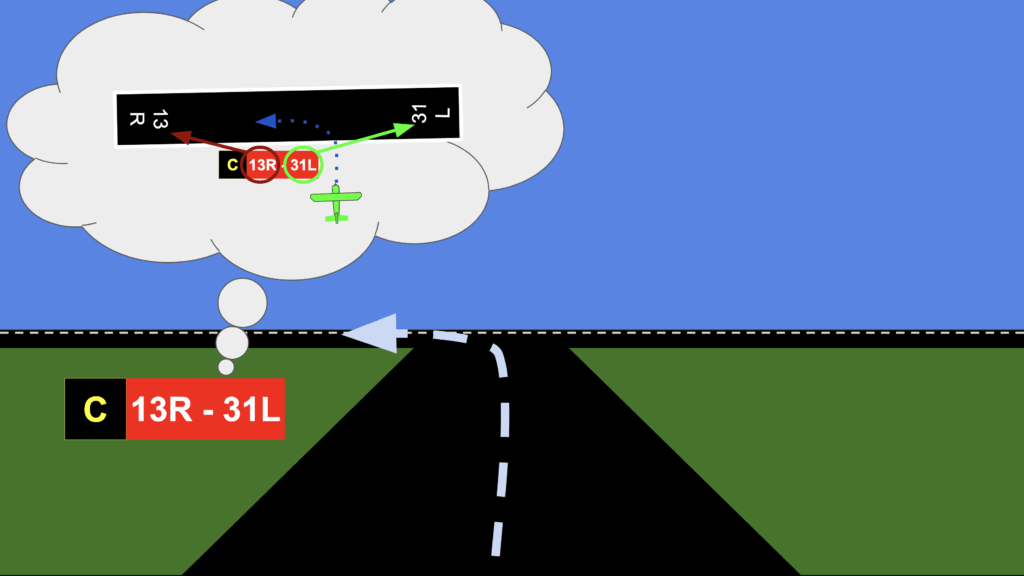
GREEN = YOU
Red = Traffic that ATC is referencing
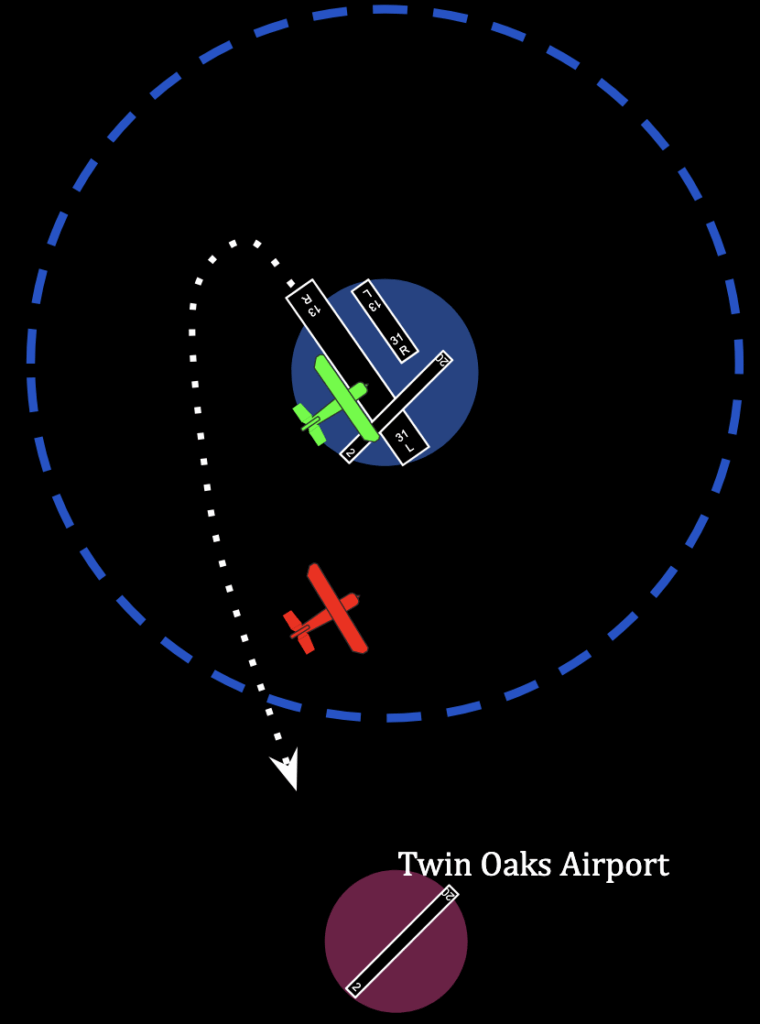
“one aircraft appears to be in the pattern at twin oaks” -> ATC is advising you of traffic at Twin oaks, probably at 1,200 ft.
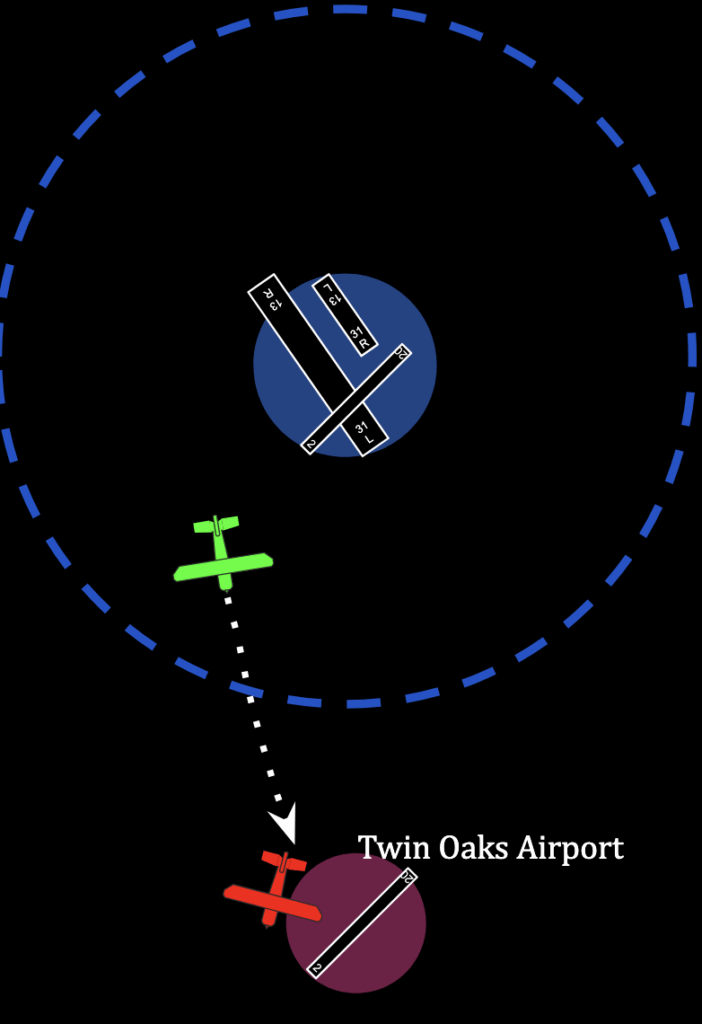
“frequency change approved” -> you may still be inside the Delta airspace, however it is OK to change frequencies now because Tower has approved it. ATC will approve this early because your destination airport is so close.
Arrivals
Arrival Example 1
You are Cessna 49194
Transcript
Pilot: “Hillsboro Tower, Cessna 49194 over forest grove inbound touch-and-goes with India”
Tower:
“Cessna 49194, Hillsboro Tower. Enter left downwind runway 31L“
Pilot: “Left downwind 31L, 194.”
Later, when you’re in the downwind, you hear. . .
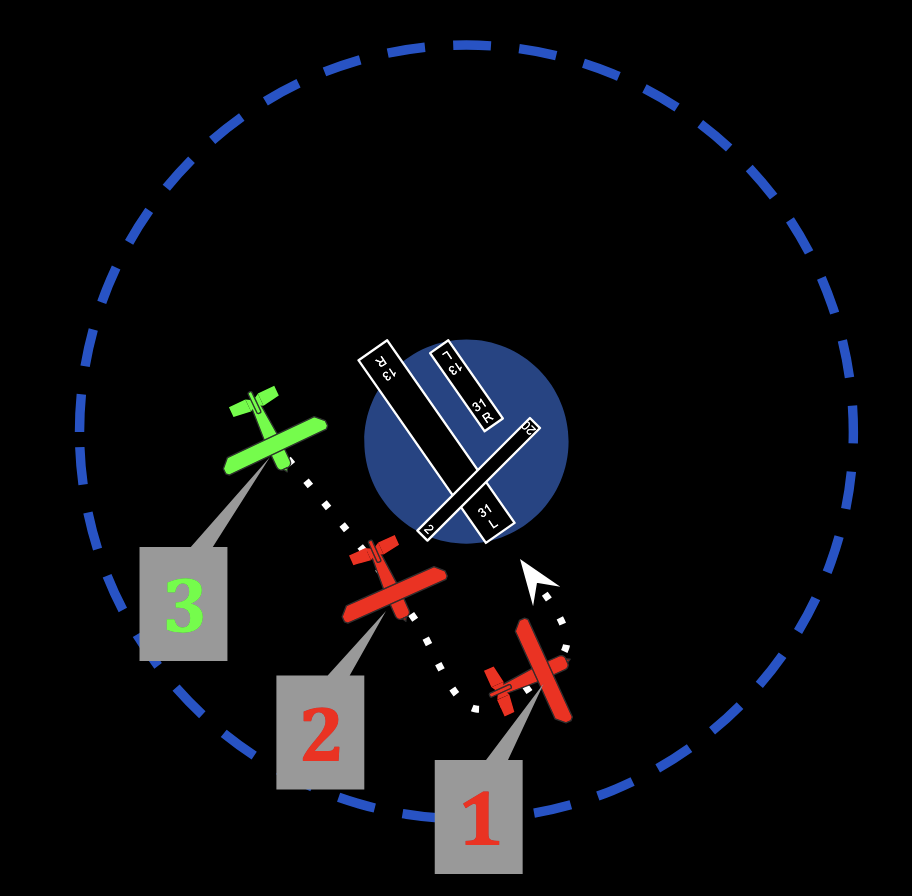
“Cessna 194 number 3 follow Cessna ahead in the downwind runway 31L cleared touch-and-go. On the go fly straight out. Winds 050 at 6 gusts 15″
Pilot: “Number 3. 31L cleared touch-and-go, then straight out. Traffic in sight. 194”
Interpretation
GREEN = YOU
Red = Traffic that ATC is referencing
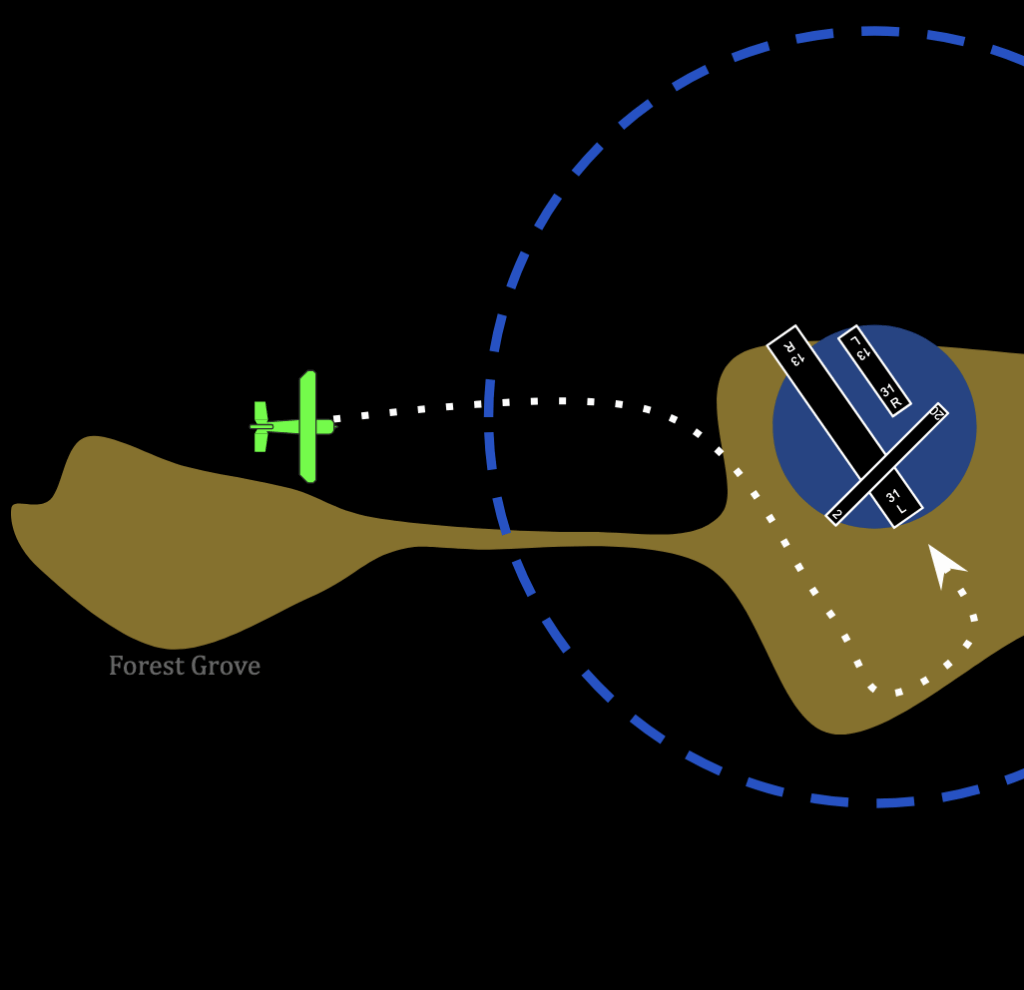
“number 3 follow Cessna ahead…” -> You will be the 3rd aircraft to land. You must readback this number with touch and go or landing clearance.
“On the go” -> Means ‘after your touch-and-go…’
Arrival Example 2
You are currently 9NM west of Hillsboro airport. You would like to make a full-stop landing. Your dialogue sounds like this. . .
Transcript
Pilot: “Hillsboro Tower, Cessna 49521 9 miles west. Inbound full stop with Charlie”
Tower:
“Cessna 48521, Hillsboro Tower. Enter left downwind runway 31L“
Pilot: “Left downwind 31L, 521.”
Later, when you get a bit closer to the airport, you hear. . .
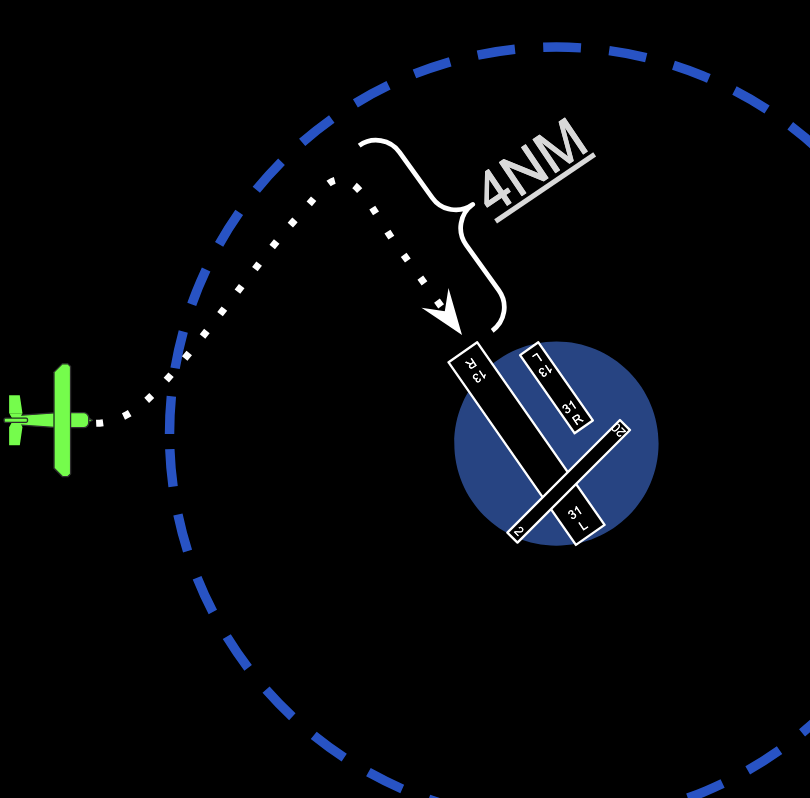
“Cessna 48521 change to runway 13R enter a right base for runway 13R fly to intercept a, uh, 4 mile final“
Pilot: “Change 13R. 4 mile, right base 13R.”
Interpretation
GREEN = YOU
Red = Traffic that ATC is referencing
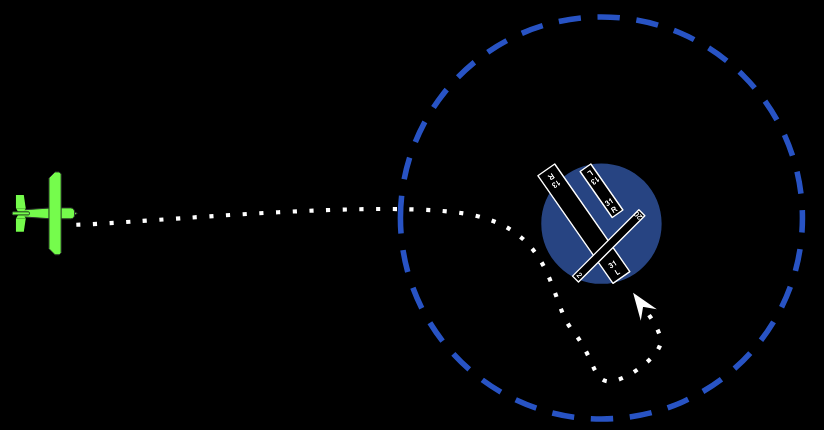
“Change to runway 13R” -> Means You will now be landing on runway 13R instead (the winds probably changed directions)!
“fly to intercept a, uh, 4 mile final” -> you were assigned to enter a right base. Normally we fly base within 1NM of the runway. Now, ATC wants you to fly base at 4NM away.
In the Traffic Pattern
Review:
Cleared to land = Full stop and taxi off the runway
Cleared touch and go = Touch down on the runway, then takeoff
Cleared Stop and go = Fully decelerate & stop on the runway, then takeoff
Cleared for the option = You may perform any of the above ^ .
Example 1
You are the pilot of Cessna 6400Q. You are doing some practice landings with your CFI. You are in the downwind when you request a “short approach”
Transcript
Pilot: “Hillsboro Tower, 00Q Request short approach”
Tower:
“Cessna 00Q, Short approach approved. Number 3, follow Cessna ahead in the downwind. Runway 31R cleared for the option winds 150 at 7″
Pilot: “Number 3 Cleared for the option 31R Traffic in sight”
After your touch-and-go, you hear your next clearance in the downwind. . .
Tower:
“Cessna 00Q short approach approved number 3 follow Cessna ahead –uh– wing up, right base. Runway 31R cleared touch-and-go. Winds 180 at 6.”
Pilot: “Number 3 cleared touch-and-go, 00Q.”
Interpretation
“short approach” -> Means turning base closer-than-normal to the airport (making a close traffic pattern). Usually this is requested when we practice simulated engine failure in the downwind.
“winds 150 at 7” -> especially since you’re practicing a simulated engine failure: the winds will affect your touchdown! In this scenario you have a ~7kt tailwind. This means with your throttle idle, you will sink quickly in downwind, but then float & have fast groundspeed on final!
“wing up, right base” -> The traffic you need to follow is currently in a bank, with their “wing up” making them easier to see!
Example 2
You are flying Seminole 1WU in the traffic pattern. Your landing clearance sounds like this. . .
Transcript
Tower:
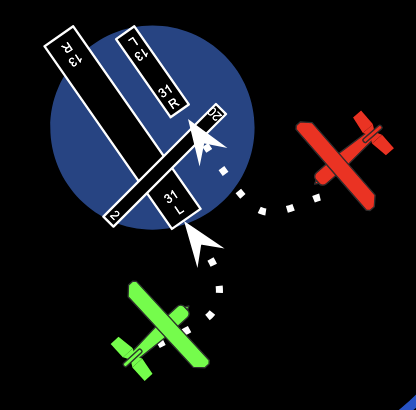
“Seminole 1WU runway 31L cleared to land winds 160 at 8 traffic wil be opposite base landing parallel runway. Cessna”
Pilot: “31L Cleared to land, traffic in sight.”
Interpretation
“Traffic will be opposite base” -> When you turn base, you will probably see a Cessna head-on with you. That is OK because. . .
“…landing parallel runway” -> . . .They will be landing on the parallel runway.
<!> avoid overshooting final turn! <!>
Example 3
You have been doing some solo touch-and-goes on RW 31L at KHIO. You’re in the downwind for 31L when all the sudden you hear. . .
Transcript
Tower:
“Cessna 836 extend downwind and contact… contact tower on 132.8 you can expect runway 31R”
Pilot: “Extend downwind, Contact tower 132.8”
Now, you set your active COM frequency 132.8. . .
Pilot: “Hillsboro Tower, Cessna 25836 on 132.8”
Tower:
“Cessna 25836 Hillsboro tower change to runway 31R. Turn base. Runway 31R cleared touch-and-go. On the go make right closed traffic.”
Pilot: “Change to 31R, turn base, 31R cleared touch and go. On the go, right traffic.”
Interpretation
“extend downwind” -> Do not turn base until your are told:
1. Cleared to land, T&G, etc.
2. Base turn approved/your discretion
3. Follow traffic. . .
“Contact tower on 132.8” -> When a towered airport gets busy, it often will use two different frequencies, one for each active parallel runway.
“expect runway 31R” -> Tower is going to change you over to practice your landings on 31R.
“change to runway 31R” -> Your assigned runway is now 31R.
“turn base” -> disregard extend downwind: Now turn base!
“on the go make right closed traffic” -> after the touch-and-go, follow left traffic pattern for your assigned runway.
Example 4
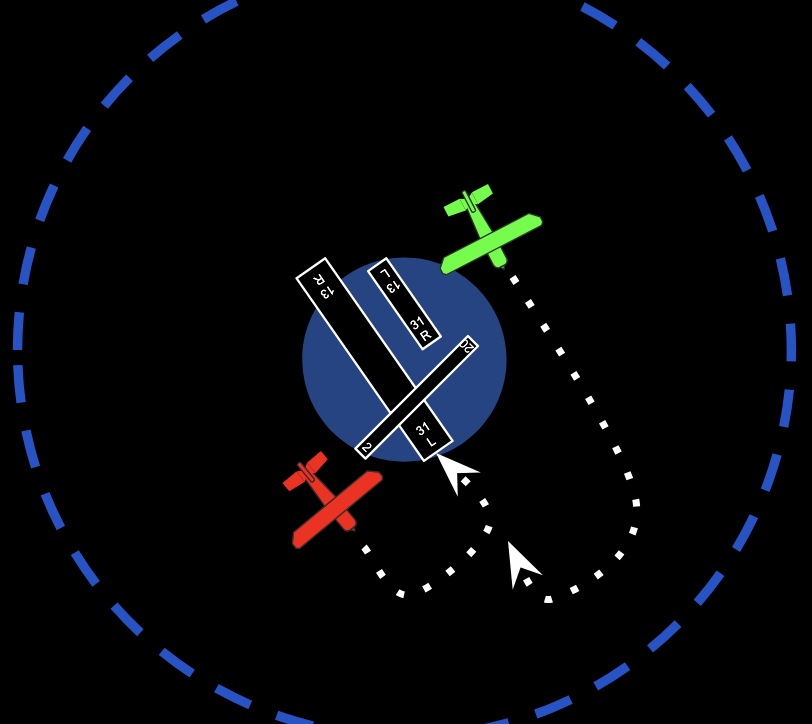
Now, You’re the pilot of Cessna 69016. You are currently in the right downwind for 31R at KHIO. You’d like to land (full stop and park). Your parking area is closer to runway 31L, so you’ll ask Tower to change to 31L for a full stop. . .
Transcript
Pilot: “Hillsboro Tower 016 Request full stop on 31L”
Tower:
“Cessna 016, roger I have your request. Continue right closed traffic and extend downwind —contact tower 119.3“
Pilot: “Right traffic, extend downwind, Contact tower 119.3, seeya!”
Now, you set your active COM frequency 119.3. . .
Pilot: “Hillsboro Tower, Cessna 25836 request full stop 31L”
Tower:
“Cessna 69016, Hillsboro Tower. Change to runway 31L. Number 2, follow Cessna off your right on the opposite downwind. Runway 31L cleared to land. Winds 060 at 7.
Pilot: “Change to 31L. 31L cleared to land, number 2, negative contact.”
Interpretation
“I have your request” -> Means ‘I understand and will try to accommodate your request.
“…on the opposite downwind” -> YOU are on RIGHT downwind, but the traffic to follow is on LEFT downwind. This can make the traffic very difficult to see. One way to mitigate risk, especially whilst solo is to request Tower to tell you when to turn base. This would sound like, “Hillsboro Tower Cessna 016, request you call my base turn”.
Additional Tricky Calls
Transition Through Delta
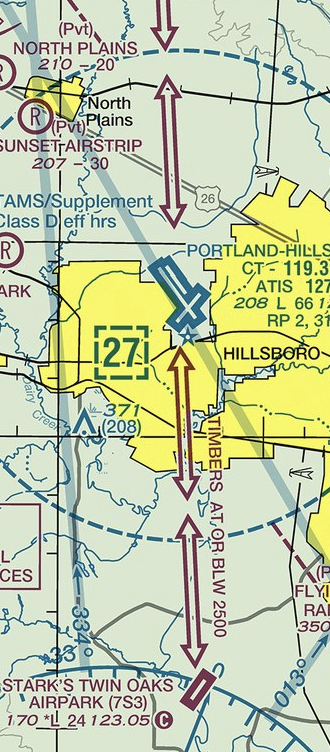
You are the pilot of 5168JV. Its a cloudy day out today! Because of the clouds, you cannot fly above Hillsboros’ Delta airspace. You want to fly through it to the south. You choose to follow the published transition route, the “Timbers Transition”.
Transcript
Pilot: “Hillsboro Tower, 5168JV . 8 North request Timbers Transition at 1,700 with Hotel.”
Tower:
“5168JV, Hillsboro Tower. Transition approved. Hillsboro altimeter 3010, traffic 12 o’ clock and 4 miles inbound to Hillsboro, descending out of 1,300. Cessna.”
Pilot: “Transition approved, negative contact.”
Interpretation
Below, these Magenta arrows define the “Timbers Transition”. Notice how it is labeled and defined as “At or below 2,500”. When requesting a transition through any delta’s airspace, it is a good idea to inform them Tower of the altitude you’d like to fly at.
Runway Change! (pt. 1)
You are the pilot of Cessna 68713. While climbing out after a touch-and-go on runway 31R, you hear. . .
Uh, oh! based on this transmission, we know tower is going to change runways!
Transcript
Tower:
“Cessna 713 make a right teardrop for runway 13L”
Pilot: “Right Teardrop change to 13L”
“Cessna 713, runway 13L cleared touch-and-go. After fly straight out. Winds 150 –correction– 050 at 9.”
Interpretation
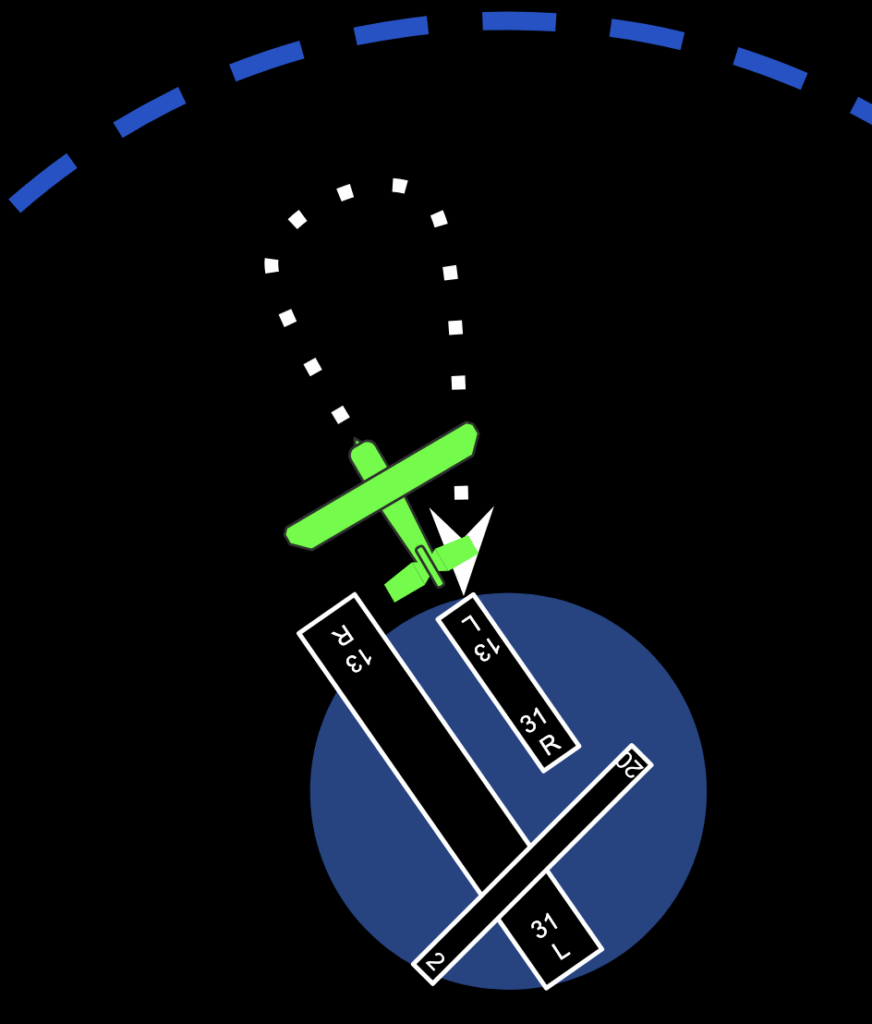
This is uncommon, but if the wind changes direction, tower may issue an instruction similar to this for traffic to change runways.
Runway Change! (pt. 2)
You are the pilot of Cessna 24266.
Transcript
Tower:
“Cessna 266 traffic ahead and to your right. Cessna, about to turn right base for runway 13R. Change to runway 13L. Runway 13L–[Cleared for the option]”
Pilot: “Traffic In sight. Change to 31L, 31L [Cleared for the option?]”
Interpretation